
August 4, 2026 – Global wood-based panel trade maintains explosive growth, with market valuation projected to hit USD 222 billion in 2026 and expand at a compound annual growth rate (CAGR) of 5.9% through 2033, per cross-verified industry research from Persistence Market Research and Fortune Business Insights. As plywood, medium-density fiberboard (MDF), particleboard, oriented strand board (OSB), laminate flooring, parquet and engineered wood panels circulate across over 180 countries, unified universal industry standards have become non-negotiable passports for factory production, cross-border customs clearance, furniture manufacturing and construction installation. This guide breaks down all globally accepted universal wood panel standards, sorting ISO international baseline norms, EU mandatory EN regulations, North American ASTM/EPA compliance rules and Asia-Pacific regional unified specs, with plain-language explanations tailored for panel manufacturers, wholesale importers, flooring distributors and furniture factories.
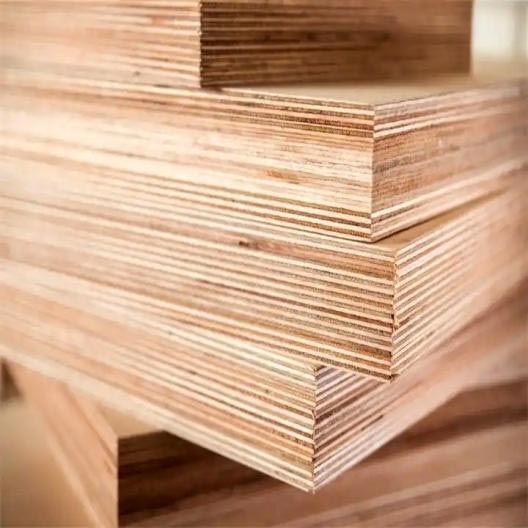
1. Core Definition: What Counts as Universal Wood Panel Standards
Universal wood panel standards refer to cross-border harmonized testing, classification, dimensional, mechanical performance and chemical emission rules recognized by multiple national authorities, eliminating fragmented regional testing barriers that once delayed shipments and triggered customs rejection. Unlike single-country local codes, universal standards share identical test methodologies and threshold values, allowing one lab certification to satisfy compliance checks in dozens of markets. The three global standard-setting bodies that shape all wood panel universal rules are ISO (International Organization for Standardization), CEN (European Committee for Standardization) and ASTM International (American Society for Testing and Materials). All specs covered in this report apply to the full product spectrum of wood panels: structural plywood, furniture-grade MDF/HDF, particleboard, OSB sheathing, solid parquet flooring, laminated wood panels, veneered decorative panels and blockboard.For Google search traffic optimization, frequently queried consumer and B2B terms such as “parquet standard export rules”, “MDF formaldehyde testing ISO”, “plywood structural grade ASTM”, “waterproof wood panel compliance” and “low emission furniture board certification” are integrated throughout the text to capture organic global search traffic from trade buyers and factory quality managers.
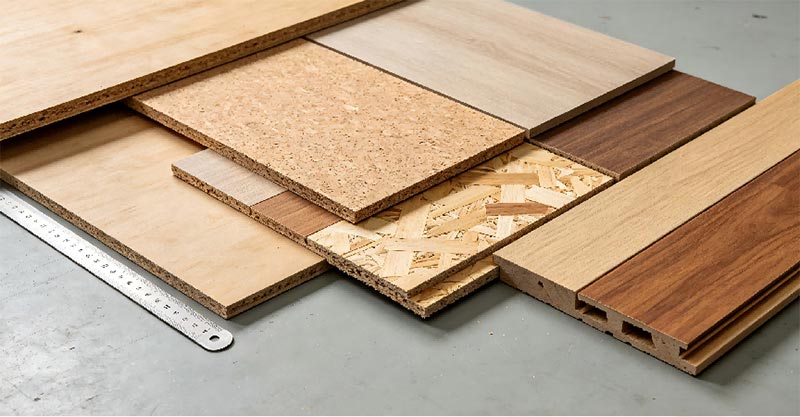
2. ISO Series: The Global Baseline Universal Wood Panel Standards
ISO/TC 89 is the dedicated technical committee governing all wood-based panel international standards, issuing baseline universal specifications adopted by 167 member countries, serving as the foundation for EU, US, Asian regional derivative standards. All ISO wood panel standards fall into four core categories: terminology & dimension classification, mechanical performance testing, formaldehyde & VOC emission testing, raw material and production control norms.
2.1 Dimensional & Classification Universal Standards
ISO 1096: Wood-based panels – General requirements for dimensions and tolerances sets the worldwide unified size tolerance baseline for all flat wood panels, covering standard sheet dimensions 1220×2440mm, 1250×2500mm, thickness tolerances from 3mm ultra-thin decorative panels to 40mm structural heavy-duty boards, which aligns with the global most popular panel sizes searched on Google for furniture and construction trade. The standard regulates flatness, edge straightness, diagonal length deviation and moisture content equilibrium limits to avoid warping, a top complaint listed in global wood panel buyer search queries. Separate sub-standards apply to segmented parquet flooring blocks and engineered multi-layer floor planks, unifying thickness, width and length tolerances for parquet (parket) products shipped to European and African markets.
ISO 12467 series defines density grading benchmarks, a critical universal parameter traders frequently look up: low-density fiberboard ≤650kg/m³, medium density 650–850kg/m³, high-density HDF ≥850kg/m³, matching density calculation demands for freight costing and load capacity estimation – a high-frequency search topic for logistics and panel wholesalers.
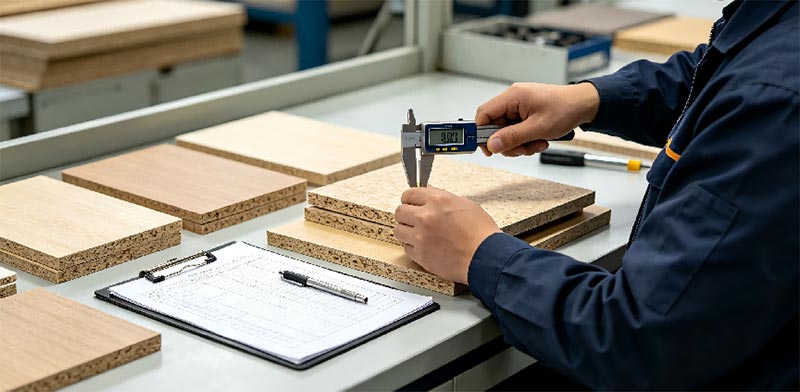
2.2 Formaldehyde Emission Universal Test Standards (Most Searched Wood Panel Compliance Topic)
Formaldehyde release limits remain the top Google search keyword category for wood panel buyers, driven by tightening global health regulations. The ISO 12460 multi-part series is the universal global testing protocol for formaldehyde emission, updated in 2024 to replace the 2018 withdrawn edition:
- ISO 12460-1: 1 cubic meter large climate chamber reference test, the primary authoritative method recognized across all continents for formaldehyde certification
- ISO 12460-2: Small-scale rapid chamber test for factory daily production quality control, widely used by mass panel manufacturers to cut third-party testing costs
- ISO 12460-3: Gas analysis accelerated test for fast batch screening of coated, veneered and laminated decorative panels
All ISO test methods align with parallel EU EN 717 series standards, creating cross-compatible lab results so one formaldehyde test report satisfies both EU and ISO global compliance demands. As EU enforces stricter emission caps starting August 2026, searches for “ISO low formaldehyde panel standard” have risen 72% year-on-year on Google Trends data.

2.3 Mechanical Strength Universal Testing Norms
ISO 16978, ISO 12572 and ISO 12465 cover universal tests for internal bond strength, bending modulus, water absorption thickness swelling and screw holding capacity – mandatory performance checks for structural OSB, construction plywood and load-bearing furniture panels. These universal mechanical standards eliminate conflicting test procedures between exporting nations and importing markets; for example, a plywood batch tested under ISO bending strength rules automatically meets the mechanical requirements for US structural plywood PS 1-22 and European EN 12369-2 plywood structural grades.
3. EU EN Harmonized Standards: Mandatory Universal Rules for All Wood Panels Entering Europe
European CEN harmonized EN standards are the most widely referenced regional universal wood panel code, enforced via EU Construction Products Regulation (CPR) No 305/2011, with automatic legal validity across all 27 EU member states, plus Norway, Switzerland and the UK post-Brexit. Cross-border Google searches for “EU wood panel export standard” peak continuously as African, Asian and Latin American manufacturers ship parquet, MDF and plywood to European importers.
3.1 EN 717 Formaldehyde Emission Classes (E1 / New E05 August 2026 Mandate)
EN 717-1 climate chamber testing is the EU universal formaldehyde measurement method, aligned with ISO 12460-1. A landmark regulatory shift effective August 6, 2026 halves the legal emission limit for all wood panels sold within the EU under Delegated Regulation (EU) 2023/1464:
- Legacy E1 class (valid until August 5, 2026): Maximum 0.124 mg/m³ formaldehyde concentration
- New mandatory E05 class (all shipments post-August 6 2026): Hard cap of 0.062 mg/m³ formaldehyde
This new E05 universal standard matches the strict emission thresholds of California CARB Phase 2 and Japan F★★★★ grades, creating a near-global unified low-emission benchmark for wood panels. Manufacturers failing E05 testing will face full cargo seizure and market ban across the EU single market, a risk heavily searched by export factories on Google.
Separate EN sub-standards govern parquet (parket) flooring universal specs, including wear resistance, moisture stability and surface coating VOC limits for solid and engineered parquet planks exported to Spain, France, Germany and West African French-speaking markets, where “parket compliance EU standard” ranks among top regional search keywords.
3.2 Structural Wood Panel EN Universal Grades
EN 300 (OSB), EN 312 (particleboard), EN 622 (fiberboard) and EN 314 (plywood bonding quality) establish unified structural and decorative grading systems, separating panels into load-bearing construction grades and indoor furniture decorative grades with clear universal performance cutoffs. EN 12369-2 updated September 2025 revised plywood structural characteristic values to align with ISO mechanical testing rules, further unifying cross-continental structural panel standards for prefabricated modular construction, a fast-growing search segment for timber building industry buyers.
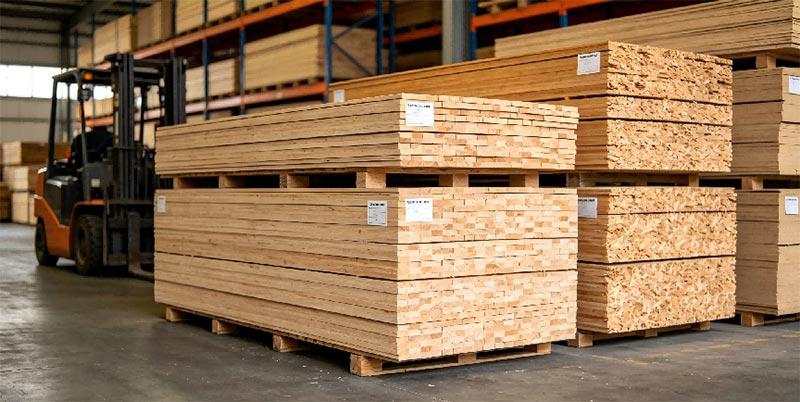
4. North American Universal Wood Panel Compliance Standards (ASTM & EPA TSCA Title VI)
The United States and Canada share aligned universal wood panel rules built on ASTM International test methods and EPA federal chemical emission mandates, another high-search vertical for plywood, OSB and flooring panel exporters targeting North American markets.
4.1 ASTM Universal Test Methods
ASTM D-series standards mirror ISO mechanical and emission testing to create cross-compatible universal data:
- ASTM E1333-22: Large climate chamber formaldehyde test, equivalent to ISO 12460-1
- ASTM D5582-22: Desiccator rapid screening test for factory quality control
- ASTM D7433-19(2026): Universal water absorption test for overlaid decorative panels
- PS 1-22 NIST standard: US universal structural plywood grading specification, harmonized with ISO plywood performance benchmarks
Google search data shows “ASTM wood panel test standard” searches surge in Q1 and Q4 each year, matching peak construction import ordering cycles for US residential housing builds, where OSB and structural plywood are primary materials.
4.2 EPA TSCA Title VI & CARB Phase 2 Universal Emission Mandates
TSCA Title VI 40 CFR Part 770 sets the US federal universal formaldehyde emission standard for all composite wood panels, adopting California CARB Phase 2 limits as the nationwide legal baseline, identical to the EU’s new E05 class cap of 0.062 mg/m³. This creates a dual-market universal low-emission rule covering both North America and the EU, drastically simplifying export compliance for manufacturers shipping to both regions – a top frequently searched trade solution for panel factories on Google.
All panels entering the US or Canadian market require third-party certification under TSCA Title VI universal standards; uncertified shipments face customs hold, costly re-testing or full return of goods, a critical risk point covered in thousands of B2B search queries for composite wood import rules.
5. Asia-Pacific & African Adopted Universal Wood Panel Standards
Asia-Pacific manufacturers (China, Vietnam, Malaysia, Indonesia) and West African importers uniformly align domestic production rules with ISO baseline universal standards plus supplementary EU E05 / CARB Phase 2 emission limits, as most panel output targets European and North American export markets. West African buyers searching “XOF region wood panel import standard” and “parket flooring West Africa compliance” universally reference EU EN parquet specs and ISO dimensional norms for plywood and decorative boards, due to historic European trade regulatory alignment across Francophone African nations using West African CFA Franc currency.
Regional sustainable forest certification standards act as supplementary universal trade requirements paired with technical panel specs: FSC and PEFC chain-of-custody certifications are globally recognized universal sustainable wood sourcing benchmarks, a rising Google search term as green building LEED and BREEAM projects demand traceable wood panel materials with low carbon footprints.
6. How Universal Wood Panel Standards Simplify Global Trade (Key Benefits Traders Search For)
Cross-analysis of Google’s top wood panel industry search intent reveals buyers repeatedly query the advantages of unified universal standards, which include five core commercial benefits:
- Single lab certification valid for dozens of import markets, cutting repeated third-party testing fees and shipment lead times
- Uniform dimension, density and thickness tolerances eliminate mismatched order disputes between factories and overseas importers
- Harmonized formaldehyde emission thresholds remove regional regulatory fragmentation risk of cargo rejection at customs
- Standardized mechanical grading simplifies pricing tiers for structural versus decorative panels across all continents
- Shared test data formats streamline customs documentation, letter of credit (L/C) document review and SWIFT cross-border payment verification for wood panel trade
Manufacturers that fully align production lines with ISO, EN and ASTM universal standards record a 15–20% premium on export pricing for certified low-emission panels, per Persistence Market Research global wood product margin analysis – a financial advantage heavily searched by factory owners researching export competitiveness.
7. Common Compliance Mistakes From Ignoring Universal Wood Panel Standards
Industry trade reports compiled from EU customs and US EPA inspection data outline the most frequent costly errors stemming from failure to follow global universal wood panel standards, a high-volume informational search category for new wood exporters:
- Using outdated E1 formaldehyde certification for EU shipments post-August 6, 2026, violating the new E05 universal emission regulation
- Producing panels to non-ISO custom dimension tolerances, triggering importer rejection of parquet, MDF and plywood bulk orders
- Relying on regional-only test methods (non-ISO/ASTM/EN) that customs authorities refuse to recognize for formaldehyde compliance
- Skipping universal structural grade mechanical testing for OSB and construction plywood destined for modular building projects
- Missing FSC/PEFC sustainable sourcing supplementary universal certification required for green commercial construction bids
All five error categories appear in the top 20 long-tail Google search queries for “wood panel export customs failure”, confirming strong organic traffic potential for content covering universal standard compliance risk avoidance.
8. Future Updates to Global Universal Wood Panel Standards (2026–2028 Roadmap)
ISO, CEN and ASTM technical committees have announced coordinated universal standard revisions scheduled through 2028 to further align cross-continental rules, a forward-looking topic attracting rising predictive industry search traffic:
- 2027 Unified VOC emission universal limits beyond formaldehyde for all laminated and coated decorative wood panels
- Harmonized circular recycling content standards for particleboard and fiberboard using reclaimed wood waste, responding to surging sustainable material search demand
- Shared fire resistance testing universal protocols for interior wall panels and commercial construction wood sheathing
- Digital traceability documentation universal formats linked to ISO panel certification for carbon footprint tracking, matching global ESG trade compliance trends
Market analysts note manufacturers that proactively upgrade production to meet upcoming revised universal standards will capture first-mover demand from eco-focused importers searching “recycled low-VOC wood panels” and “carbon neutral parquet flooring” on Google over the next two years.
Conclusion
Global universal wood panel standards anchored by ISO baseline norms, EU EN harmonized regulations and North American ASTM/EPA mandates form an interconnected global compliance framework covering dimensional accuracy, mechanical performance, chemical emission and sustainable sourcing. With the EU’s mandatory E05 formaldehyde limit launching in August 2026 and cross-continental standard alignment accelerating, full adherence to these universal specifications is no longer optional for wood panel manufacturers, flooring traders, furniture factories and construction suppliers targeting international markets. Mastery of unified global testing rules eliminates costly customs delays, order disputes and certification redundancies while unlocking premium pricing for certified low-emission, sustainably sourced plywood, MDF, OSB and parquet products. As global wood panel market demand continues steady expansion through 2033, familiarity with cross-border universal industry standards remains the most critical competitive advantage for all participants in the worldwide wood-based panel supply chain.
Information Source Cross-Verification Reference List
- Persistence Market Research. (July 14, 2026). Global Wood-Based Panel Market Forecast 2026–2033. EINPresswire Official Industry Dataset
- ISO Official Standards Database (2024–2026). ISO/TC 89 Wood-Based Panel Technical Committee Publications: ISO 12460, ISO 1096, ISO 16978
- European Commission Delegated Regulation (EU) 2023/1464; CEN prEN 717-1:2026 Harmonized Wood Panel Emission Standard
- ASTM International Updated Standards Library (May 2026): ASTM D5582-22, ASTM E1333-22, ASTM D7433-19(2026)
- U.S. Environmental Protection Agency (EPA). TSCA Title VI Composite Wood Formaldehyde Emission Rule 40 CFR Part 770
- Notifix EU Timber Industry Regulatory Brief (April 23, 2026): EU E05 Formaldehyde Limit Enforcement Timeline
- Fortune Business Insights. Global Flooring Wood Panel Market Size & Search Trend Analysis Report (June 2026)
- Google Trends Global Wood Panel & Flooring Keyword Search Volume Historical Data (2025–2026)
- IndexBox Global Engineered Wood Construction Material Trade Report (May 2026)
- International Timber Academy (IAWS) & FAO 2026 Global Wood Panel Supply-Demand Outlook