
August 5, 2026 — International buyers often use the general term “wood panel” when sending inquiries, but this broad label covers dozens of distinct products. Mixing up panel categories leads to wrong quotations, unsuitable samples, container rejection, project delays and costly claims. Many trade disputes happen simply because exporters and importers refer to different panel types without clear classification. This article systematically sorts out all mainstream global wood-based panel categories in simple and easy-to-understand language, analyzing structural characteristics, core advantages, inherent weaknesses, industry standards and mainstream application scenarios. It provides standardized product selection guidance for global wood panel manufacturers, foreign trade sellers, procurement merchants and construction contractors, while covering high-traffic Google search keywords to improve overseas organic exposure.
Wood-based panels are industrial composite boards manufactured by bonding wood veneers, wood fibers, wood chips or wood strips with environmental adhesives under high temperature and high pressure. They effectively solve the natural defects of solid wood, such as easy deformation, irregular specifications, insufficient large-size plates and high raw material costs. According to different raw material structures and production processes, commercial wood panels circulating in global trade are strictly divided into independent categories, each with exclusive testing standards, mechanical properties, moisture resistance levels, price systems and applicable markets. The mainstream traded types include plywood, Oriented Strand Board (OSB), particleboard, Medium-Density Fibreboard (MDF), High-Density Fibreboard (HDF), blockboard and veneered decorative panels.
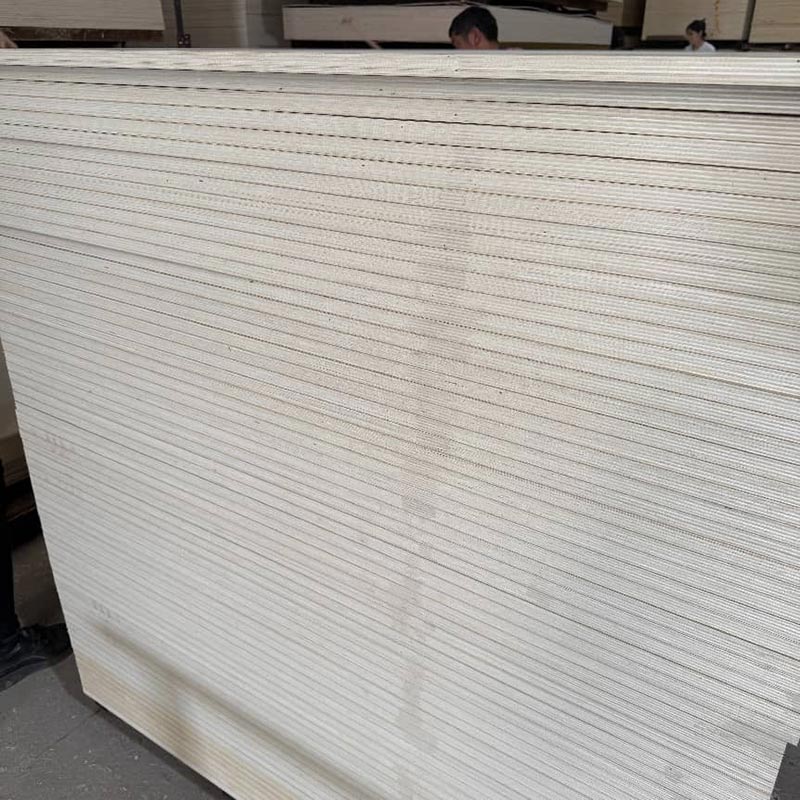
1. Plywood: Cross-Laminated Multi-Layer Veneer Structural Panel
Plywood is the most widely used structural wood panel in international trade. It is made of multiple layers of thin wood veneers bonded crosswise with vertical grain directions, which greatly balances the internal stress of wood and achieves excellent dimensional stability. Compared with solid wood, plywood features low warping rate, high overall strength and strong load-bearing capacity, and is divided into two core categories: structural plywood and decorative plywood.
Structural plywood complies with international mainstream standards including AS/NZS 2269, US PS 1-22 and European EN 314. Its core assessment indicators focus on bending strength, elastic modulus, internal bonding strength and waterproof durability. It is mainly used for building formwork, wall support, floor base layer, container bottom board, modular building structure and outdoor engineering facilities. Most outdoor structural plywood adopts WBP waterproof glue to adapt to humid and changeable construction environments.Decorative plywood takes surface veneer texture and flatness as the core indicators, with relatively low requirements on mechanical strength. It is widely used for interior wall decoration, furniture surface cladding and indoor modeling projects. It is worth noting that decorative plywood cannot replace structural plywood for load-bearing construction purposes even with the same thickness, which is one of the most common mistakes in international procurement.
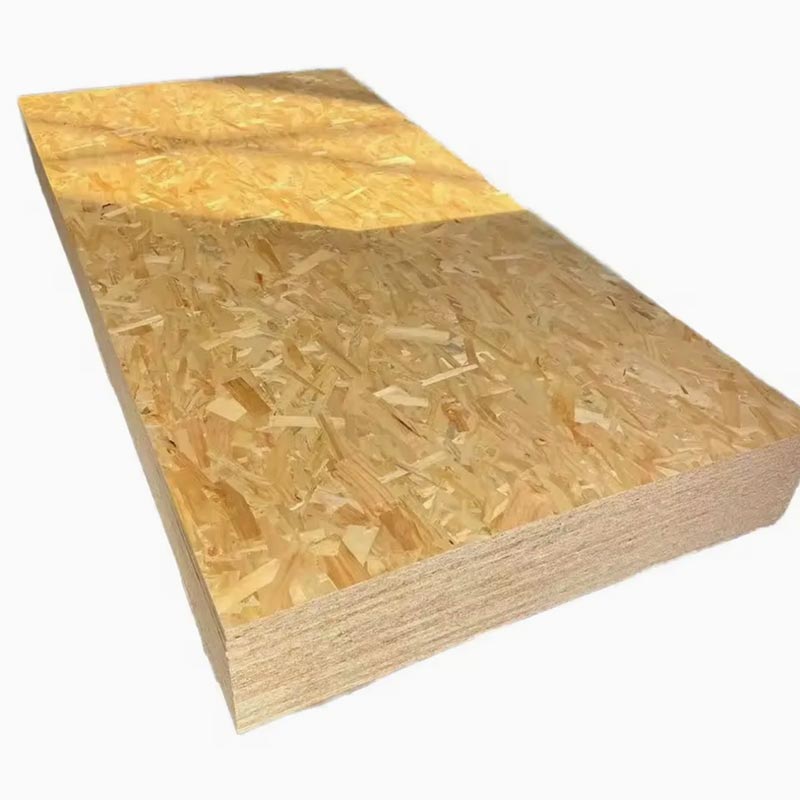
2. OSB (Oriented Strand Board): Directional Wood Strand Structural Board
OSB is a new type of engineered structural panel made of large-diameter wood strands arranged in directional layers and pressed integrally. The surface strands are arranged along the length direction, and the inner strands are cross-arranged, forming a stable three-dimensional mechanical structure. Classified by the European unified standard EN 300, OSB is divided into four grades: OSB/1 for general indoor use, OSB/2 for dry indoor load-bearing, OSB/3 for humid environment load-bearing, and OSB/4 for heavy-duty outdoor structural engineering.
In the global construction market, OSB is the most competitive substitute for structural plywood. It has uniform material, stable performance and cost advantages, and is widely used for roof boarding, wall substrate, floor support and temporary construction facilities. Due to its rough surface texture, OSB is not suitable for direct decorative surface use and needs subsequent veneering or coating treatment.In export trade, grade confusion is the main risk of OSB sales. Many merchants mistakenly sell ordinary indoor OSB/2 panels for outdoor and humid engineering projects, which easily causes water swelling, delamination and quality complaints.
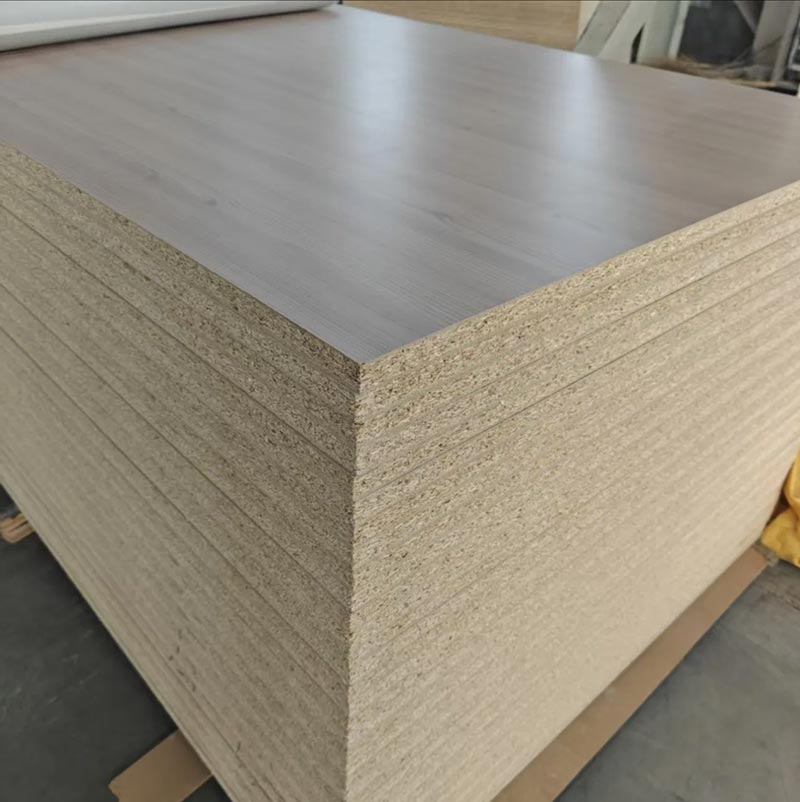
3. Particleboard: Wood Chip Composite Budget Panel
Particleboard, also known as chipboard, is formed by mixing small wood scraps, branch materials and wood chips with adhesive and hot-pressing. It has the advantages of ultra-flat surface, no wood grain difference, high utilization rate of raw materials and low manufacturing cost, and is the mainstream base material of global budget furniture.
According to the European standard EN 312, particleboard is divided into P1 to P7 grades, covering general furniture board, dry floor board, moisture-proof board and heavy load-bearing board. Ordinary P1-P3 particleboard has poor moisture resistance and is only suitable for dry indoor furniture, cabinet bodies and display shelves. High-grade moisture-proof particleboard can be used for kitchen and semi-humid indoor spaces, but still cannot adapt to outdoor open environments.Most low-cost furniture procurement orders searched on Google focus on particleboard products. Professional buyers will clearly distinguish between ordinary particleboard and enhanced moisture-proof particleboard to avoid quality risks caused by environmental mismatch.
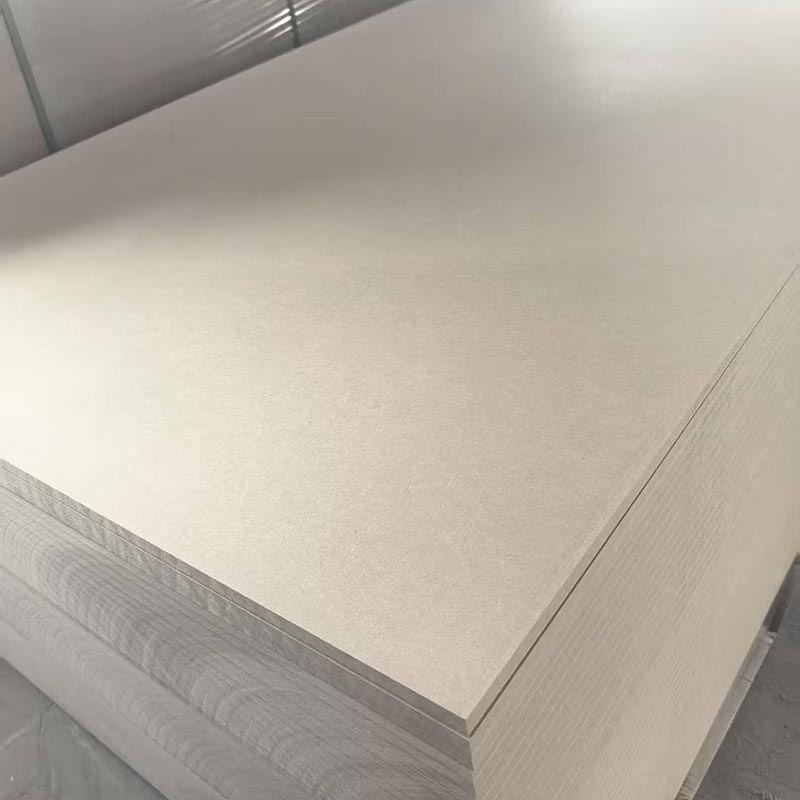
4. MDF & HDF: Homogeneous Fine Fiber Decorative Panels
MDF (Medium-Density Fibreboard) and HDF (High-Density Fibreboard) are made of refined wood fibers through high-temperature grinding and integral pressing. The internal structure is uniform and void-free, with super smooth surface, which is the best wood panel for painting, veneering, CNC carving and modeling.
MDF has a density range of 650–850kg/m³, suitable for indoor doors, decorative lines, furniture panels and wall modeling. HDF with density above 850kg/m³ has super hardness and wear resistance, and is mainly used for laminate flooring base boards and high-strength decorative substrates.The biggest disadvantage of fiberboard is poor natural moisture resistance. Ordinary MDF will swell and deform rapidly after absorbing water. Although waterproof modified MDF exists in the market, it still cannot be used outdoors for a long time without full sealing treatment.
5. Blockboard: Solid Wood Strip Core Composite Panel
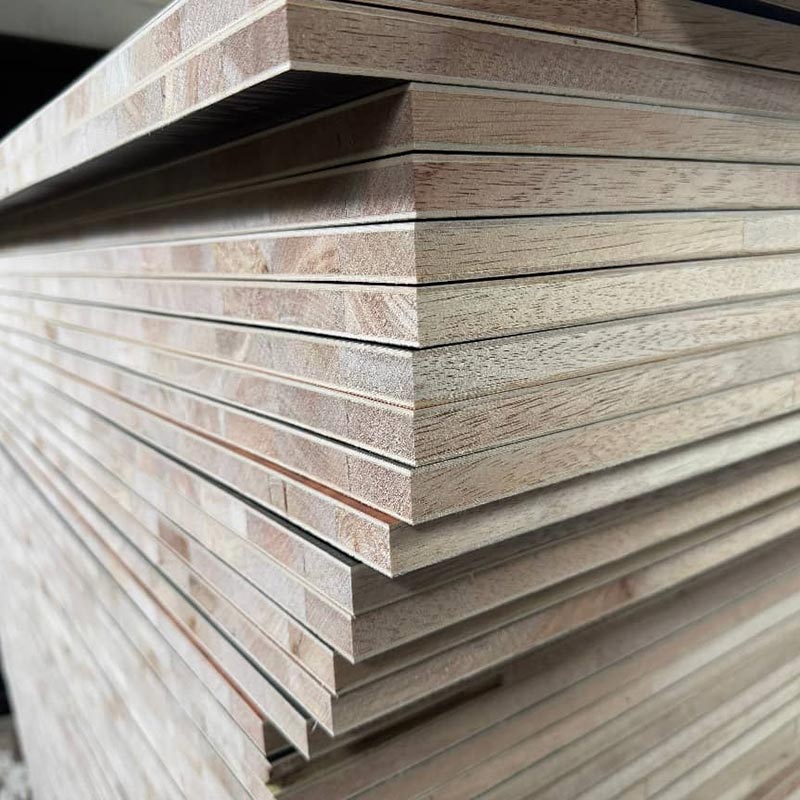
Blockboard takes continuous solid wood strips as the inner core and is compounded with two-layer veneers on the upper and lower sides. It combines the stability of artificial boards and the solid wood texture of solid wood materials, with light weight, strong nail holding power and easy processing. It is very popular in Africa, the Middle East and South Asian markets.Blockboard is mainly used for door cores, partition walls, tabletops and light furniture frames. It is different from plywood in structural stress. It is suitable for light decorative and load-bearing scenarios, but cannot bear long-term heavy structural load like high-grade structural plywood.
6. Veneered Decorative Panel: High-End Finished Composite Board
Veneered panel is a finished decorative board formed by pasting natural hardwood veneers such as oak, walnut, ash and teak on substrates including plywood, MDF and particleboard. It perfectly solves the problem of unstable solid wood deformation, while retaining the natural high-grade wood texture.
High-end furniture factories, interior decoration companies and engineering procurement merchants are the main purchasers of veneered panels. The core product differentiation lies in substrate material, veneer thickness, splicing grade and surface environmental protection treatment. Veneered MDF and veneered plywood belong to completely different products with different prices and application scenarios, which must be clearly distinguished in trade quotations.
7. Core Trade Skills to Avoid Panel Category Confusion
In global wood panel trade, product category confusion is the primary cause of order disputes, customs inspection failures and customer complaints. First of all, exporters must avoid general quotation of “wood panel”. According to the customer’s usage scenario, clearly confirm whether the product is used for structural load-bearing or interior decoration, indoor dry environment or outdoor humid environment.
Secondly, never judge product performance only by thickness. Panels of the same thickness such as 18mm plywood, 18mm MDF and 18mm particleboard have completely different structures, HS codes, mechanical properties and market prices.
Third, match exclusive industry standards for different panels. AS/NZS 2269 and EN 314 apply to plywood, EN 300 applies to OSB, EN 312 applies to particleboard, and ISO 12467 series applies to fiberboard classification. Cross-standard quotation will lead to unrecognizable customer inspection and customs filing risks.
8. 2026–2027 Global Panel Category Market Trend
The global wood panel market presents obvious segmented development characteristics. The construction engineering market maintains stable demand for structural plywood and OSB; the high-end furniture and decoration market continues to expand the demand for veneered panels and high-density fiberboards; the mass civilian furniture market maintains large-volume procurement of economical particleboards.
With the continuous upgrading of global environmental protection regulations such as EU E05 formaldehyde standard, CARB Phase 2 and TSCA Title VI, all composite wood panels have raised environmental protection thresholds. At the same time, FSC and PEFC sustainable forest certification have become essential supporting documents for high-end structural and decorative panel exports.
Global buyers are becoming more professional. Simple low-price competition is gradually eliminated, and standardized classification, clear performance parameters and compliant certification have become the core basis for customer selection. Export enterprises with clear product classification and standardized product introduction will occupy greater market share in global trade competition.
Conclusion
Different types of wood-based panels have irreplaceable application scenarios in construction, furniture, decoration and packaging fields. Plywood and OSB dominate the structural engineering market, MDF and veneered panels occupy the high-end decoration market, and particleboard and blockboard undertake the civilian furniture and light decoration market. Accurate classification and correct product selection are the key to avoid trade risks and improve export profit margins. In the increasingly standardized global wood panel trade in 2026, mastering professional product category knowledge is the core competitiveness of every foreign trade enterprise.
Reference & Verification Sources
1. European Committee for Standardization. (2022). EN 312:2022 Particleboards Specification Standard.
2. European Committee for Standardization. (2019). EN 300:2019 Oriented Strand Board (OSB) Performance Classification.
3. Standards Australia. (2022). AS/NZS 2269:2022 Structural Plywood Industry Standard.
4. ISO Official Database. (2025). ISO 12467 & ISO 12468 Wood-Based Panel Classification and Terminology Standards.
5. APA – The Engineered Wood Association. (2026). Global Engineered Wood Panel Product Application Guide.
6. Timber Research and Development Association (TRADA). (2026). International Wood Panel Selection Manual for Importers.
7. IndexBox Global Timber Industry Report. (Q2 2026). Global Wood Panel Category Trade Volume and Demand Segmentation Analysis.
8. European Panel Federation. (2026). Market Segmentation Report for Fibreboard, Particleboard and Plywood.